The Rampage of Opportunistic Power Politics

Seventy-five years have passed since India attained independence. After one hundred and fifty years of British colonial rule, this country adopted a democratic system founded upon a written Constitution. Despite its vast geographical expanse, linguistic multiplicity, cultural plurality, and enormous population, the Indian democratic experiment has, comparatively speaking, proved successful—this must be acknowledged. Many Western thinkers, sociologists, and political critics doubted whether such an experiment could endure for long. That doubt, however, has been decisively disproved.

Yet, within the very womb of this democracy, certain deeply pernicious tendencies have taken root—slowly but inexorably. Today they have grown so rampant that one is compelled to ask whether democracy has been reduced to a mere name. Particularly in light of the recent elections to local self-governing bodies in Maharashtra, what is unfolding no longer remains a matter of suspicion alone; it has nearly reached the level of an unavoidable conclusion.

Politics in Maharashtra today has become so fluid—fluid like a sewage drain—so unstable and so devoid of principles that it has become difficult even to identify which leader belongs to which party. A political worker no longer holds an ideology; for him political parties have become merely a temporary halts, convenient platforms, escalators to power.

In Maharashtra, on 24 December, the Thackeray brothers announced that they would contest the local body elections together. Following this declaration, Shiv Sainiks and MNS workers across the state erupted in celebration. Among the jubilant was a senior former corporator from Nashik belonging to MNS Party—an individual with long experience in party-hopping and a seasoned wrestler in this political arena. Before the echoes of that celebration had even faded, the same corporator joined the Bharatiya Janata Party. To abandon, within hours, the very leadership in whose name slogans were raised, applause thundered, and emotions overflowed—and to embrace another party—defies any psychological, ideological, or political explanation. Yet the corporator justified his decision as being “for the development of Nashik,” attempting thereby to soothe both his own conscience and the discernment of gullible citizens. He may well have succeeded—because gullibility has today become the strongest pillar supporting our democracy.

This is not an exception; it is a system. In post-independence India, the term “Aaya Ram, Gaya Ram” became synonymous with Indian politics. To curb this menace, the Tenth Schedule of the Constitution—the anti-defection law—was enacted. To some extent, it did prove useful; this cannot be denied. But it is here that the ingenuity of Indian politicians reveals itself: they rendered even this law ineffective. Instead of direct defections, a new game began under the guise of “party splits.” While paying ostensible respect to the letter of the law, the spirit of democracy was murdered, and the arithmetic of power was recalculated.

What transpired in Maharashtra just days before the nomination process for municipal elections would be an insult to language if described merely as “political chaos.” In the vocabulary of the Shiv Sena, it was nothing short of a “maha-rada”—a grand melee. Who was allying with whom, who was abandoning whom, lay beyond comprehension. Such a colossal disorder—such a spectacle—had never before been witnessed by Maharashtra. One could no longer tell whether this was an electoral process or a battlefield. Even in war, one can identify friends and enemies. Here, yesterday’s enemy becomes today’s ally, and today’s associate becomes tomorrow’s foe. The word “loyalty” has grown so obsolete that it survives only in speeches. Party workers who have laboured for years are sidelined, while candidates “downloaded and imported” overnight are handed tickets—because they possess money, connections, and the ‘capacity’ to win. What lies at the root of all this? Is it merely an individual moral decline, or does it point to a deeper, more entrenched structural reality? The question arises inevitably.

If one wishes to understand Indian politics, it cannot be examined merely through the framework of parties, elections, and alliances. Beneath these flows a far more ancient, long-standing, and civilisational struggle. The Indus Valley Civilisation and its successor, the Vedic Civilisation, rooted for nearly 3,900 years, have shaped the Indian collective psyche through two fundamentally distinct world-views. On one side stands the Indus inspiration—emphasising scientific temper, equality, civic reason, and systemic discipline. On the other stands the Vedic inspiration—anchored in spirituality, social hierarchies, sacrifice, Yadnya, rituals, symbols, and notions of sanctity.

In the post-independence era, the Congress largely represented the Indus Valley civilisational perspective, while the BJP represented the Vedic civilisational outlook. Within this ideological struggle, the question of right or wrong does not arise; these are two independent and distinct visions of the world. In a democracy, voters can choose parties aligned with whichever civilisational ethos they prefer through the electoral process. But today, in Maharashtra—and indeed across the country—this conflict has been relegated to the background.

For a third force has now become decisive. This force belongs neither to the Indus nor to the Vedic tradition. It is the force of opportunistic power politics, money culture, and ideological hollowness. For this force, ideology is merely a costume—changeable according to occasion. A party is merely a vehicle—to reach power. An election is not an opportunity to serve, but an investment—from which returns are expected within five years. Tragically, elements devoid of any ideological trace, driven solely by money and power, have entered the parties representing these two civilisational streams and have taken them in a stranglehold. One is compelled to ask today—what truly binds political parties together now: ideology and civilisation, or groups that have infiltrated them purely on the strength of money?

This condition is not confined to Indian democracy alone; similar patterns are visible across the world. Nobel Prize–winning economist Joseph Stiglitz once titled an article, “Of the 1%, by the 1%, for the 1%.” In that essay, he argued that Abraham Lincoln’s definition of democracy—“government of the people, by the people, and for the people”—no longer exists, and has been replaced by a system “of the 1%, by the 1%, and for the 1%.” It is a system that has become a puppet in the hands of the wealthiest 1 percent. I agree with this assessment one hundred percent. Democracy today has become the handmaiden of the rich, and the global deterioration it has suffered is mirrored in our local self-governing institutions as well. Therefore, the crying, rioting, sulking, wailing, aggression, appeasement of leaders, protests, confrontations, hunger strikes, public denunciations of one’s own party during campaign meetings, vandalising party offices, and the ultimate absurdity—swallowing the AB form—are not acts of social service. They are driven by the hunger for power and the financial benefits that flow from it. One does not need a Nobel laureate to explain this; all of it arises from the frustration of being deprived of anticipated economic gains. Stiglitz’s thesis today stands nakedly visible in Maharashtra’s local self-governing bodies. The outcry over denial of a ticket is not a cry for public service; it is a scream of anguish born of the fear of losing potential financial profit.

Today, party-switching does not occur for development, for public interest, or for the betterment of cities. It occurs solely for power—and for the money that power brings. There may be exceptions; but democracy does not function on exceptions. It functions on averages—and today that average is grotesque.

What is unfolding during elections in Maharashtra is not merely political news for any rational citizen who believes in democracy; it is a grave warning. The ideological struggle between the Indus and Vedic civilisations has been pushed aside, and a conquering “money culture” has seized control of politics. Even more tragic is the fact that both these great civilisations are being used merely as weapons to win elections, exploit emotions, and capture power.

The conflict between archaeological remains and sacred hymns has not disappeared; but it has now been overrun by a third intruder—the culture of money—which feels neither shame before the remains nor reverence for the hymns. And before this encroachment, the people remain asleep.

This is an extremely dangerous phase for Maharashtra, and by extension for Indian democracy. For when thought exits politics, only the arithmetic of money remains—and in that arithmetic, the human being is always deceived.

In municipal and local body elections today, party-switching is not seen as a means to improve public services, build infrastructure, generate employment, or maintain social harmony. The craving for power exists to increase one’s own wealth. There are exceptions—indeed, there are—but democracy does not run on exceptions. All corporators, as elected representatives, are expected to function as “guardians of the city.” Hence, the chaos, instability, and moral degeneration witnessed in Maharashtra during local body elections now provoke the unsettling question: has this become a political inevitability?

Whether to run governments or to win elections, alliances are formed and broken; yesterday’s opponents become today’s friends. Political workers cross ideological and civilisational boundaries to defect from one party to another. There is only one reason behind this—power. And power means more money, more influence, and greater personal gain.

The question is no longer whether the Indus civilisation flaunted by the Congress is superior or the Vedic civilisation wielded by the BJP; that debate itself has become a grotesque distraction, for democracy lies already asphyxiated—strangled by a rapacious” money-culture” that has subjugated both the parties and now rules Indian politics with impunity.

This is a tragic and deeply worrying reality. Even more unfortunate is the misuse of the ideological traditions of both the Indus and Vedic civilisations as mere tools to win elections, binding those ideologies to the yoke of money culture—while the people remain in a state of slumber. What is happening in Maharashtra during elections today is a matter that demands serious reflection from every progressive, rational citizen who believes in democracy.

-Mahesh Zagade

Standard

सॉक्रेटिसचं तूफान: लोकशाही आणि बोटीवरील कप्तान

प्राचीन ग्रीसमध्ये, अथेन्स शहरात, सॉक्रेटिस नावाचा एक विचारवंत होता. तो लोकांना प्रश्न विचारून त्यांचा विचार करायला लावायचा. त्याने एकदा एक गोष्ट सांगितली: एका बोटीचा कप्तान आजारी पडला तर, बोट कोण चालवेल? लोकांनी निवडलेला माणूस की जो खरंच बोट चालवायला शिकलेला आहे? सॉक्रेटिस म्हणाला, बोट चालवण्यासाठी कुशल कप्तान हवा, जो फक्त लोकांना आवडतो तो नाही. लोकशाहीत, लोक आपल्या नेत्याला निवडतात, पण सॉक्रेटिसला वाटलं की यामुळे कधी कधी अयोग्य माणूस नेते होतो.

मी बराच काळ सॉक्रेटिसच्या या मताशी सहमत नव्हतो. मला वाटायचं, लोकशाही ही सगळ्यात चांगली पद्धत आहे. लोकांनी एकत्र येऊन आपला नेता निवडणं योग्य आहे. पण आता, आजच्या जगाकडे पाहताना, मला प्रश्न पडतोय: मी माझ्या आयुष्यभर चुकीचा विचार करत होतो का? आज आपण निवडलेले नेते बोटीचे कप्तानासारखे आहेत का, ज्यांना बोट चालवता येत नाही? आपण सगळे मिळून संकटाच्या दिशेने जात आहोत का?

बोटीची गोष्ट आणि आपलं जग

सॉक्रेटिसची बोटीची गोष्ट म्हणजे आजचे जगातील अनेक देशाचं चित्र आहे. बोटीला समुद्रात वाचण्यासाठी चांगला कप्तान हवा, जो ताऱ्यांचा अभ्यास करतो आणि वाऱ्याची दिशा समजतो. बोटीवर काम करणारे लोक वेगवेगळे असतात, पण सगळ्यांनी एकत्र काम करायला हवं. सॉक्रेटिस म्हणाला, लोकांनी निवडलेला कप्तान जर बोट चालवायला शिकलेला नसेल, तर बोट बुडू शकते.

आज अनेक  देशांचं तसंच आहे. लोक नेते निवडतात, पण त्यांना देश चालवण्याची खरी समज नसते . काही नेते फक्त छान बोलतात किंवा लोकांना प्रभावित करतात. लोकशाहीत, मतदानातून नेते निवडले जातात, पण कधी कधी लोक फसव्या गोष्टींना भुलतात. काही देशांत, निवडणुका फक्त नाटक असतात, आणि नेते फसवणुकीने सत्तेत येतात. अशा नेत्यांमुळे देश अडचणीत येतो.

आज जगात अनेक संकटं आहेत. हवामान बदलतंय, लोकांमध्ये भांडणं वाढतायत, आणि पैशाची असमानता वाढतेय. या सगळ्याला सामोरं जाण्यासाठी चांगले नेते हवेत, पण आपण निवडलेले नेते कधी कधी फक्त स्वतःचा फायदा पाहतात.

लोकशाहीत काय चूक आहे?

लोकशाहीवर प्रश्न विचारणं कठीण आहे. लोकांनी स्वतःचा नेता निवडावा, असं आपल्याला वाटतं. मी बराच काळ असं मानलं की लोकशाही ही सगळ्यात चांगली आहे. ती परिपूर्ण नाही, पण ती लोकांना बोलण्याचं, जगण्याचं स्वातंत्र्य देते. पण आता मला वाटतं, आपण नेते कसे निवडतो यात काही चूक आहे. आजच्या मोठ्या समस्या सोडवण्यासाठी खूप हुशार आणि समजदार नेते हवेत. पण आपली निवडणूक पद्धत कधी कधी फक्त प्रसिद्ध किंवा लोकप्रिय माणसांना पुढे आणते.

सॉक्रेटिस म्हणाला, नेत्याला देश चालवण्याची कला यायला हवी, फक्त लोकांना आवडणं पुरेसं नाही. त्याचं म्हणणं खरं आहे का? आपण चुकीचे नेते निवडतोय का?

आता काय करायचं?

लोकशाही सोडून द्यायची का? नाही, ते योग्य नाही. लोकशाही ही आपली ताकद आहे. पण आपण ती सुधारू शकतो. काय करायला हवं?

पहिलं, लोकांना चांगलं शिक्षण द्यायला हवं. लोकांना खरं-खोटं ओळखता यायला हवं. शिक्षणाने लोक चांगले नेते निवडू शकतील.

दुसरं, निवडणुकीची पद्धत बदलायला हवी. नेत्यांना फक्त छान बोलून नाही, तर त्यांचं ज्ञान आणि काम दाखवावं लागेल. निवडणुकीत खरे प्रश्न आणि उत्तरे असायला हवी.

तिसरं, नेत्यांना जबाबदार ठेवायला हवं. जर नेता चूक करत असेल, तर त्याला थांबवायला हवं. न्यायालय, वृत्तपत्रं आणि लोकांनी नेत्यावर लक्ष ठेवायला हवं.

शेवटी, इतर देशांकडून शिकायला हवं. काही देश चांगलं काम करतात, त्यांच्याकडून आपण शिकू शकतो. आपला देश एकट्याने सगळं करू शकत नाही, सगळ्यांनी एकत्र यायला हवं.

शेवटी  मला प्रश्न पडलाय: मी सॉक्रेटिसला विरोध करताना चुकीचा होतो का? कदाचित पूर्ण चुकीचा नाही, पण माझा विचार पूर्ण नव्हता. लोकशाही ही एक बोट आहे, जी आपल्याला पुढे नेऊ शकते. पण आपण चांगला कप्तान निवडला नाही, तर बोट बुडू शकते. सॉक्रेटिसचं म्हणणं ऐकायला हवं—लोकांचा आवाज महत्त्वाचा आहे, पण नेत्याला देश चालवायची कला यायला हवी. नाहीतर, आपण सगळे संकटात जाऊ. ही वेळ आहे विचार करण्याची आणि आपली बोट योग्य मार्गावर नेण्याची.

Standard

The Socratic Storm: A Meditation on Democracy and the Captainless Ship

In the shadow of the Acropolis, where the sun cast its golden arguments upon the agora, Socrates once stood, a gadfly among men, pricking the conscience of Athens with questions that cut deeper than swords. Among his provocations was a metaphor that has sailed through the centuries, weathering storms of thought and tides of history: the ship of state. He asked, with that sly simplicity that masked his profundity, whether one would entrust the helm of a vessel, battered by the high seas and bereft of its captain, to a man elected by the crew’s clamor rather than chosen for his mastery of the stars and the winds. To Socrates, the answer was as clear as the constellations: a ship needs a navigator, not a demagogue. Democracy, he implied, with its penchant for elevating the loudest voice or the most pleasing face, risked foundering on the reefs of incompetence.

For much of my life, I have resisted this Socratic barb, clinging to the belief that democracy, for all its messiness, is the least imperfect of systems—a raft cobbled together by human hands, buoyant enough to carry us through the tempests of history. I have championed the ballot, the voice of the many, the idea that wisdom, however diffuse, resides in the collective will. Yet, as I stand now upon the deck of the present, gazing at the horizon of our world, I find myself haunted by Socrates’ question. The seas are rough, the skies foreboding, and the captains we have chosen—elected by the fervor of crowds or the machinations of power—seem ill-equipped to steer. Have I been wrong all my life to oppose Socrates’ skepticism of democracy? Are we, as a species, sailing toward a collective disaster, our hands clasped to the tiller of a ship guided not by skill but by applause?

The metaphor of the ship is no mere rhetorical flourish; it is a mirror held to the soul of governance. A vessel at sea is a microcosm of society, its survival dependent on the delicate balance of trust, expertise, and purpose. The captain, schooled in the art of navigation, reads the stars not for poetry but for survival. The crew, diverse in their roles, must act in concert, their labors harmonized by a shared goal: to reach safe harbor. Socrates’ critique was not of the crew’s worth but of their judgment in choosing who should lead. A captain elected for charm or bravado, rather than competence, might win the day’s cheers but lose the ship to the storm’s indifference.

Today, the world’s nations are ships adrift, their helms gripped by leaders who, too often, seem to have been chosen not for their seamanship but for their ability to sway the crowd. From the marble halls of Western democracies to the iron citadels of authoritarian states cloaked in democratic garb, we see captains who navigate not by the stars of reason or the compass of justice but by the fleeting gusts of public sentiment or the siren call of power. The evidence is stark: economies teeter on the brink of whirlpools, inflamed by shortsighted policies; societies fracture under the weight of polarization, as leaders stoke division rather than mend it; and the planet itself groans, its climate battered by inaction while captains debate the existence of the storm.

Consider the democracies of our age, those proud galleons of human aspiration. In nations once hailed as beacons of liberty, we find leaders elevated not by their grasp of the ship’s workings but by their mastery of spectacle. They are performers, not navigators, their speeches woven from the threads of populism or platitude. The ballot box, that sacred mechanism of choice, has become a stage for charisma over substance, where the loudest voice or the most viral slogan drowns out the quiet competence of the skilled. Socrates warned of this: the demos, swayed by flattery or fear, might choose a captain who promises calm seas but cannot read the charts.

Nor are the pseudo-democracies spared. In lands where elections are but theater, the captain is not elected so much as anointed, propped up by the machinery of propaganda or the sword of coercion. These ships, too, falter, their crews disillusioned, their hulls rotting from neglect. The metaphor holds across regimes: whether by vote or by force, the wrong captain spells ruin.

Yet to question democracy is to walk a perilous plank. To doubt the wisdom of the many is to risk scorn, for the idea that the people should govern themselves is woven into the fabric of our age. I have spent decades defending this principle, arguing that the collective, for all its flaws, possesses a resilience that no single mind can match. The history of human progress—fitful, bloody, but undeniable—bears this out. Democracy, with its checks and balances, its capacity for renewal, has toppled tyrants, righted wrongs, and given voice to the voiceless. It is not a perfect system, but it is a living one, capable of learning from its errors.

Or so I believed. Now, as I survey the tempests gathering on our horizon, I wonder if my faith has been misplaced—not in the crew, but in the mechanisms by which we choose our captains. The challenges of our era are not the squalls of old, easily weathered by grit and goodwill. Climate change, technological disruption, global inequality—these are maelstroms that demand leaders of extraordinary foresight, courage, and expertise. Yet our systems, democratic and otherwise, seem engineered to reward the short-term, the superficial, the divisive. The ballot box, once a tool of liberation, now often serves as a megaphone for fear or apathy. The media, meant to illuminate, amplifies noise over signal. And the people, weary or distracted, too often entrust the helm to those who promise smooth sailing while ignoring the gathering clouds.

Socrates’ critique, then, is not a dismissal of the crew’s potential but a challenge to their discernment. He did not advocate for kings or oligarchs; his ideal was the philosopher-captain, a leader guided by reason and virtue. Such a figure is rare, perhaps mythical, but the principle endures: leadership demands competence, not popularity. The ship of state cannot afford a captain who learns on the job, not when the stakes are existential.

What, then, is to be done? If we concede that Socrates was right—that democracy, left unchecked, risks elevating the unqualified—must we abandon the experiment altogether? The thought is unbearable, for to forsake democracy is to surrender the very agency that defines us as free. The answer lies not in scuttling the ship but in refitting it, in forging systems that honor the will of the many while ensuring the wisdom of the chosen.

First, we must reimagine the education of the crew. A democracy thrives only when its citizens are equipped to discern truth from sophistry, to value expertise over bluster. Education, not merely in facts but in critical thought, is the sextant by which we navigate the seas of information. A people schooled in reason will demand captains worthy of the helm.

Second, we must reform the mechanisms of selection. The electoral process, now a circus of soundbites and scandals, must be recalibrated to prize substance. Longer campaigns, perhaps, to test endurance; public forums, not staged debates, to probe knowledge; and transparency, to expose conflicts of interest before they fester. The ballot box must be a crucible, not a popularity contest.

Third, we must cultivate a culture of accountability. A captain who errs must be corrected, not indulged. Independent institutions—courts, press, civil society—must serve as the ship’s rigging, holding the leader steady against the winds of hubris or corruption. And the crew, ever vigilant, must be ready to mutiny when the captain steers toward ruin.

Finally, we must embrace the humility to learn from other ships. No nation is an island, and the challenges we face are global. The best practices of governance—whether from small democracies with high trust or from technocratic systems with proven results—must be studied, adapted, and shared. The ship of state is not a solitary vessel but part of a fleet, and our survival depends on collective wisdom.

As I stand upon this deck, the waves of doubt lap at my feet. Have I been wrong all my life to resist Socrates’ warning? Perhaps not wrong, but incomplete. Democracy is not a destination but a journey, a ship that must be constantly repaired, its course corrected by the stars of = democracy itself. We need not abandon the ship, but we must choose our captains with care, for the seas are unforgiving, and the storm is upon us. Let us heed Socrates’ call—not to reject the voice of the many, but to ensure that the hands on the tiller know the way. For if we fail, the disaster will not be his, nor mine, but ours.

-Mahesh Zagade

Standard

अमेरिकेच्या जागतिक व्यापारात एकतर्फीपणा: डोनाल्ड ट्रम्प यांच्या नव्या राजकीय धोरणाचा परिणाम

जागतिक व्यापार आणि आंतरराष्ट्रीय संबंध हे आजच्या आधुनिक युगातील महत्त्वाचे आधारस्तंभ आहेत. देश एकमेकांशी व्यापार, गुंतवणूक आणि धोरणात्मक संबंध ठेवून एकमेकांच्या प्रगतीस हातभार लावतात. मात्र, याचे स्वरूप काही नेत्यांच्या हट्टी आणि अस्थिर धोरणांमुळे धोक्यात येऊ शकते.  

अमेरिकेचे माजी राष्ट्राध्यक्ष डोनाल्ड ट्रम्प यांनी “अमेरिका फर्स्ट” या धोरणाचा पुरस्कार करत अनेक आंतरराष्ट्रीय करार आणि संस्थांना दूर्लक्ष केले. त्यांच्या या भूमिकेमुळे अमेरिका आणि जग यांच्यातील आर्थिक व राजकीय संतुलन ढासळण्याची शक्यता निर्माण झाली आहे.  

कालच्या त्यांच्या निर्णयानुसार, जागतिक व्यापार संघटना (WTO) आणि इतर आंतरराष्ट्रीय सहकार्य संस्थांना बगल देऊन, त्यांनी एकतर्फी करार आणि ‘प्ररतिशोधात्मक शुल्क’ (Reciprocal Tarrifs)लावण्याची घोषणा केली. यामुळे जगभरातील अर्थव्यवस्था आणि राजकीय परिघांवर मोठा परिणाम होणार आहे.  

अमेरिकेच्या व्यापारविरोधी भूमिकेचे संभाव्य परिणाम

१. जागतिक अर्थव्यवस्थेवरील परिणाम

अमेरिका ही जागतिक व्यापारातील प्रमुख भागीदार असून तिच्या धोरणांमुळे अनेक देशांच्या अर्थव्यवस्थेवर परिणाम होतो. अमेरिका निर्यातीसाठी महत्त्वाचा बाजार आहे आणि तिथे विक्री करणाऱ्या कंपन्यांसाठी हा निर्णय मोठा धक्का असेल.  

– अमेरिका व्यापारात बंदी आणल्यास अनेक देशांना आपले उत्पादन व निर्यात धोरण बदलावे लागेल.  

– पुरवठा साखळी (Supply Chain) विस्कळीत होईल, याचा फटका लघु आणि मध्यम उद्योगांना बसेल.  

– अमेरिका स्वतःही मोठ्या प्रमाणावर आयात करते. जर जगभरातून अमेरिकेला वस्तू मिळणं कठीण झालं, तर महागाई वाढेल आणि ग्राहकांच्या खिशावर परिणाम होईल.  

२. अमेरिकेच्या आर्थिक व्यवस्थेवरील परिणाम

अमेरिका स्वतःही अनेक आंतरराष्ट्रीय उत्पादनांवर अवलंबून आहे. जर तिने व्यापार थांबवला, तर तिच्या उद्योगधंद्यांना मोठ्या अडचणी येतील.  

– डॉलरची किंमत घसरेल आणि जागतिक बाजारपेठेत अमेरिकेचा दबदबा कमी होईल.  

– आंतरराष्ट्रीय गुंतवणूकदार अमेरिकेकडे पाठ फिरवतील.  

– कामगार कपात, महागाई आणि आर्थिक मंदी यांसारखे संकट निर्माण होईल.  

३. चीन आणि BRICS गटाचा उदय

अमेरिकेच्या माघारीमुळे चीन, भारत, रशिया आणि अन्य BRICS देशांना व्यापारात नवे संधीचे दरवाजे उघडतील.  

– चीन जागतिक व्यापाराचा केंद्रबिंदू बनू शकतो.  

– डॉलरवरील अवलंबित्व कमी करून इतर चलनांचा वापर वाढेल.  

– अमेरिकेच्या व्यापारविरोधी धोरणांमुळे जगातील अनेक देश BRICS समूहाशी अधिक जवळीक साधतील.  

डोनाल्ड ट्रम्प यांचे नव-साम्राज्यवादी  (Neo-Colonial) धोरण

१. विस्तारवादी विचारसरणीचे पुनरागमन?

डोनाल्ड ट्रम्प यांनी त्यांच्या कार्यकाळात अमेरिकेच्या भौगोलिक विस्ताराची कल्पना मांडली. त्यांनी कॅनडा, ग्रीनलँड, पनामा कालवा आणि गाझा पट्टी हे भाग ताब्यात घेण्याची शक्यता व्यक्त केली होती. ही कल्पना आधुनिक जगात अशक्य वाटली तरी, त्यांच्या विचारसरणीने एक नव-साम्राज्यवादी धोरण सुचवले.  

२. जागतिक शांततेवर परिणाम

– अमेरिकेच्या या नवनवीन आर्थिक आणि भौगोलिक महत्त्वाकांक्षांमुळे अनेक देश अस्वस्थ झाले आहेत.  

– जर अमेरिका जागतिक संस्थांना डावलून व्यापार आणि विस्तार धोरण अवलंबत राहिली, तर जागतिक स्थैर्य धोक्यात येईल.  

– रशिया, चीन आणि इतर शक्ती अमेरिकेच्या विरुद्ध आघाडी निर्माण करू शकतात.  

डोनाल्ड ट्रम्प यांच्या “अमेरिका फर्स्ट” या धोरणाने जागतिक व्यापार, राजकीय स्थैर्य आणि आंतरराष्ट्रीय संबंधांना मोठे आव्हान दिले आहे. कालच्या त्यांच्या घोषणेमुळे अमेरिका आणि संपूर्ण जग एका मोठ्या आर्थिक व राजकीय संघर्षाच्या उंबरठ्यावर उभे आहे.  

– जर अमेरिका संरक्षणवादी धोरणावर ठाम राहिली, तर ती स्वतःच्या अर्थव्यवस्थेचे नुकसान करून घेईल.  

– जागतिक व्यापाराच्या नव्या केंद्रस्थानी BRICS समूह उभा राहू शकतो.  

– जागतिक राजकारणात बहुपोलत्व (Multipolarity) वाढेल आणि अमेरिका एकहाती सत्ता गमावेल.  

यामुळे जग एका मोठ्या आर्थिक व राजकीय वादळाच्या दिशेने वाटचाल करत आहे. पुढील काही महिने आणि वर्षे ठरवतील की अमेरिका “अविचारी राष्ट्रवादाचा” मार्ग स्वीकारणार, की जागतिक सहकार्य आणि संवादाचा मार्ग पत्करणार?

Standard

The New World Discord: Trump’s Trade War and the Global Response

In the arena of international diplomacy and commerce, where every handshake, agreement, and negotiation weaves the intricate tapestry of global stability, one man’s decree has sent tremors through the delicate fabric of economic interdependence. Yesterday, President Donald Trump unilaterally announced a sweeping set of reciprocal tariffs, bypassing the World Trade Organization and throwing a gauntlet at the feet of the international community.  

This act, characteristic of Trump’s impulsive approach to governance, does not merely herald a new phase in America’s protectionist trade policies—it invites the world to reimagine its dependence on the United States. What happens when the world, weary of the erratic nature of American leadership, decides to sever economic ties, forging a new order in which Washington’s dictates are no longer the fulcrum around which global commerce pivots?  

America’s Self-Imposed Isolation: A Fractured Global Economy

For nearly a century, the United States has occupied a dual role in global affairs: both the world’s largest consumer market and a self-styled guardian of the international economic order. American capital fuels industries across the globe, its markets absorb exports from every continent, and its financial institutions shape monetary policies far beyond its borders. But Trump’s insistence on unilateralism—manifested in his latest tariff imposition—begs the question: Can the world afford to disengage from the United States?  

If the response from global powers were one of collective defiance, the consequences for the American economy would be swift and severe. The fragile balancing act of its trade deficit—long a sticking point in Trump’s rhetoric—would collapse under the weight of abandoned export markets. The dollar, once the bedrock of international transactions, could see accelerated devaluation as nations move towards alternative reserve currencies. The vast financial networks that link New York’s stock markets to the world’s economies would splinter, redirecting capital towards more stable and predictable partners.  

For the United States, the irony would be profound. The “America First” doctrine, designed to strengthen domestic industry, would find itself hoisted upon its own petard as global supply chains reroute around American ports, leaving its industries gasping for access to critical raw materials and foreign consumer bases.  

The Trumpian Vision of Expansionism: The Colonial Mindset Reborn

Yet Trump’s ambition stretches beyond mere economic warfare. His rhetoric—at times veiled, at times brazen—suggests an unsettling return to a 19th-century worldview, one in which territorial expansion is not an anachronism but a viable policy tool. His previous musings about the annexation of Greenland, the control of the Panama Canal, and even the absorption of Canada into the U.S. fold betray an imperialistic impulse that modern diplomacy has long sought to bury.  

It is a stance that clashes violently with the very principles the United States once espoused. From its post-World War II role as a leader in establishing the United Nations and the Bretton Woods institutions to its championing of free trade agreements, America has historically projected an image of itself as a custodian of global order. Yet under Trump, this image has begun to erode, replaced by a vision of a fortress state seeking not partnership, but dominance.  

BRICS and the Rise of a Post-American World

If Trump’s tariffs are a challenge to the world, they also present an opportunity—a chance for emerging global powers to solidify an alternative economic framework that does not hinge on American participation. The BRICS nations—Brazil, Russia, India, China, and South Africa—have already begun laying the groundwork for financial independence from the dollar, exploring alternative trade routes and payment systems. With Trump’s continued alienation of allies and partners, the incentive for Europe, Latin America, and even traditional U.S. allies in Asia to seek economic security outside the U.S. sphere grows stronger.  

China, in particular, stands poised to capitalize on Trump’s folly. With its Belt and Road Initiative already reshaping global trade infrastructure, Beijing could accelerate its push to replace the U.S. as the economic nucleus of the world. The European Union, increasingly frustrated with Washington’s unpredictability, may further align with alternative trade blocs, reducing American influence over regulatory and trade standards.  

A World at a Crossroads

With one sweeping stroke of tariff imposition, Trump has not only tested the patience of global trade partners but has also set into motion the potential realignment of economic alliances. The question now is whether the world will tolerate this latest display of American unilateralism or whether it will seize the moment to forge a more multipolar trade environment—one where no single nation wields disproportionate economic leverage.  

For the United States, the road ahead under Trump’s stewardship seems destined to be one of increasing isolation. The world, once tethered to Washington’s policies, is now looking beyond the Atlantic for stability, security, and partnership. Should the global community choose to disengage, America may find itself not at the helm of a new economic order, but adrift in a tempest of its own making.

-Mahesh Zagade

Standard

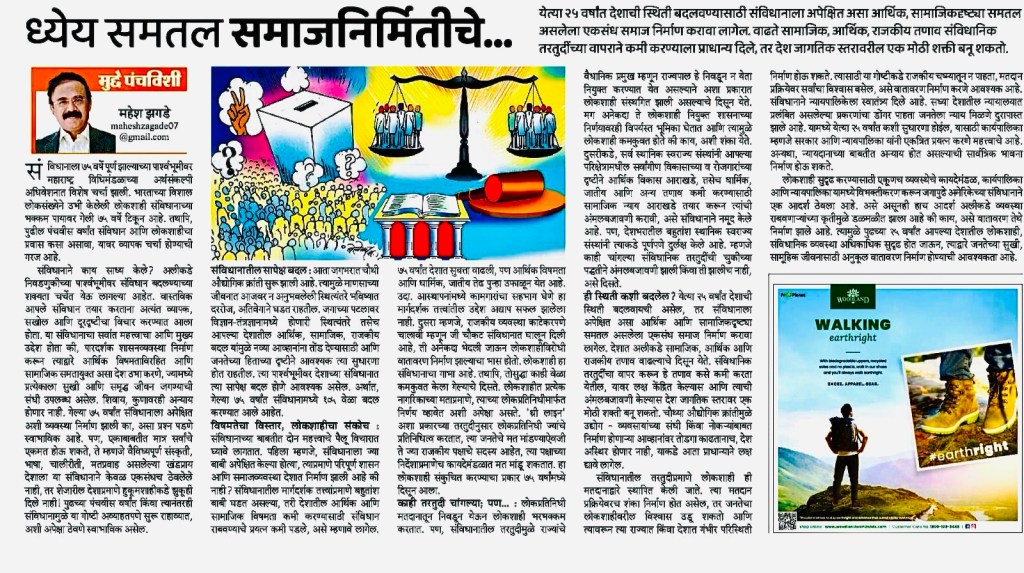
The Indian Constitution at 75: Reflection, Resilience, and the Road Ahead  for next 25 years 

(Originally published in Divya Marathi in Marathi on 30/3/2025)

As the Indian Republic commemorates seventy-five years of its Constitution, the Maharashtra Legislative Assembly has undertaken a significant discussion on its journey and the course it must chart for the next twenty-five years. The Constitution, the bedrock of the world’s largest democracy, has not only provided a stable framework for governance but has also ensured that the nation—despite its vast and diverse populace—remains steadfastly united, resisting the perils of authoritarianism that have engulfed many of its neighbors.  

Yet, amidst this celebration of constitutional endurance, murmurs of unease have surfaced. Political discourses have, of late, been rife with assertions that certain factions seek to alter the constitutional framework or draft a parallel charter. Such rhetoric, whether driven by genuine intent or political maneuvering, demands deeper contemplation.  

The Constitutional Promise: A Dream Fulfilled or Deferred?  

When the framers of the Indian Constitution meticulously sculpted this monumental document, they envisioned a nation governed with transparency, where justice reigned supreme, and economic disparities did not hinder social harmony. It was designed to be a charter of equality, ensuring every citizen an opportunity for a dignified existence, free from oppression.  

And yet, as we stand at this juncture, it is only natural to ask—has India realized the aspirations embedded in its founding document? The answer, like the democracy it nurtures, is complex. While the Constitution has undeniably kept the nation unified and prevented a descent into autocracy, it has struggled to eradicate deep-seated economic and social inequalities. Though prosperity has expanded, so too has disparity, and the specters of caste and communal discord, which the Constitution sought to dissolve, have begun resurfacing with unsettling prominence.  

The Constitution as a Living Document  

Over the past seventy-five years, the Indian Constitution has undergone 105 amendments—averaging 1.4 amendments per year—testament to its adaptability. Indeed, it was never meant to be an immutable relic but a living document, evolving to meet the demands of a changing world. As the Fourth Industrial Revolution accelerates, heralding transformations in ways never before witnessed by humankind, constitutional frameworks, too, must remain attuned to these shifts. The rapid advancements in artificial intelligence, automation, and biotechnology may soon redefine human civilization itself, necessitating a legal and ethical structure that keeps pace with such seismic changes.  

Yet, constitutional evolution must be guided by principle rather than political expediency. The true measure of progress lies not merely in amendments but in whether they serve the founding ideals of justice, liberty, and fraternity.  

Constitutional Implementation: Shortcomings and Challenges  

Beyond its adaptability, the effectiveness of a constitution is judged by the fidelity with which its provisions are implemented. Here, India’s record presents a paradox. While the Directive Principles of State Policy have guided governance, certain fundamental objectives remain unfulfilled. For instance, the principle of involving laborers in industrial decision-making, a vision enshrined in the Constitution, remains largely unrealized. The rigidity of party politics has, at times, overridden the autonomy of elected representatives, particularly through mechanisms like the “Three-Line Whip,” which binds legislators to their party’s stance rather than their constituents’ interests.  

Moreover, while democracy is fortified through direct elections—from the Gram Panchayat to the office of the President—there exists an anomaly in the gubernatorial system. Governors, who serve as constitutional heads of states, are not elected but appointed, often leading to friction between elected state governments and the central authority. This raises critical questions about the role of gubernatorial discretion in a federal democracy.  

Equally troubling is the neglect of constitutional mandates regarding local governance. The 73rd and 74th Constitutional Amendments entrusted local bodies with the responsibility of economic planning, employment generation, and social harmony, yet, across the country, these directives have been largely ignored. The failure to empower grassroots democracy remains one of the starkest gaps in constitutional implementation.  

Strengthening Democracy: The Next Twenty-Five Years  

As India marches towards its centenary as a Republic, the next twenty-five years will be pivotal in shaping its democratic destiny. The fundamental challenge will be to forge a more equitable society—one where economic disparities do not translate into social divides. The rising political, economic, and social tensions must be addressed through constitutional means rather than extra-legal maneuvers. A robust, transparent, and inclusive governance model is essential to ensuring that India does not merely remain a democracy in form but flourishes as one in spirit.  

Technological upheavals, particularly in employment and industry, pose another looming challenge. With automation threatening traditional livelihoods, a strategic roadmap is required to prevent economic instability. The Constitution must not only safeguard political democracy but also extend its vision to economic resilience, ensuring that technological progress does not come at the cost of widespread dislocation.  

Further, electoral credibility must remain sacrosanct. The very essence of democracy hinges on the people’s faith in the voting process. Any erosion of this trust—whether through doubts over electoral integrity or coercive political practices—can imperil the entire democratic framework. Thus, fostering an unimpeachable electoral system, free from partisan interference, is imperative.  

The Role of Institutions and Judiciary  

The accountability of governance structures must also be reinforced. Every year, the central, state, and local governments must present an honest appraisal of their constitutional obligations—what has been achieved and what remains unfulfilled. This will not only enhance transparency but also instill a culture of accountability.  

Likewise, the judiciary, entrusted with upholding constitutional sanctity, must address the mounting backlog of cases that has rendered justice a distant dream for many. The legal system must undergo urgent reforms to ensure that justice delayed does not become justice denied. The coming decades must witness a collaborative effort between the legislature, executive, and judiciary to enhance judicial efficiency without compromising its independence.  

The American Parallel: Lessons and Cautions  

Globally, the American Constitution has long been revered for its robust system of checks and balances. However, even in the United States, recent years have seen deep fissures in the democratic framework, raising concerns about institutional resilience. If the world’s once strongest democracy is not immune to political and constitutional instability, India, too, must remain vigilant. The constitutional edifice must not only be preserved but fortified against forces that seek to undermine it—be they internal political dynamics or external pressures.  

The Constitution as a Guardian of the Future  

As India stands at the threshold of its next constitutional era, it must reaffirm its commitment to democracy, social justice, and economic parity. The Constitution, more than just a legal document, is a covenant between the state and its people—a promise of a just and equitable society.  

For this promise to endure, both the ruling establishment and the citizenry must act as its vigilant custodians. Only through an unwavering commitment to its principles can India ensure that, in its hundredth year as a Republic, it does not merely celebrate constitutional longevity but exemplifies constitutional excellence.  

— Mahesh Zagade

Standard

सामूहिक चेतनेच्या झोपेचा शाप  

मानवाच्या इतिहासात अनेक वेळा असे घडले आहे की, मानवाच्या निष्काळजीपणामुळे भयानक संकटे निर्माण झाली आहेत. एकत्रित निष्क्रियतेच्या झोपेमुळे अन्याय, हुकूमशाही राजवटी, आणि अस्तित्वाला धोका पोहोचवणारे संकटे जोमाने फोफावली आहेत. जणू समाजाची सामूहिक इच्छाशक्ती सुस्त झाली असून, ती त्यांच्या भविष्यकाळाला वाईट दिशेने वळविणाऱ्या शक्तींना आत्मसमर्पण करते. या झोपेतून मानवता संकटांमुळेच जागी होते आणि त्या काळातील हानी भरून काढण्यासाठी पुन्हा प्रयत्न करते. जणू संकट हेच जागृतीसाठी मोजले जाणारे मूल्य आहे.

जातिव्यवस्थेचा शाप:

भारतीय उपखंडात सुमारे ३५०० वर्षांपूर्वी वर्णाश्रम व्यवस्थेचा उगम झाला. सुरुवातीला ती समाजातील भूमिकांची आखणी करणारी होती. पण, समाजाच्या सामूहिक निष्क्रियतेच्या झोपेमुळे, ही व्यवस्था कठोर जातिव्यवस्थेत बदलली आणि लाखो लोकांना अपमानजनक व दडपलेल्या जीवनाची शिक्षा भोगावी लागली. बहुसंख्य लोकांच्या सामूहिक निष्क्रियतेच्या झोपेमुळे अन्यायाचा स्वीकार झाला आणि तो समाजात रुजला. आजही ही जातिव्यवस्था समाजाच्या जखमांवर व्रणासारखी राहिली आहे, जी सामूहिक निष्काळजीपणाचे प्रतिक आहे.  

मानवी गुलामगिरी:

मानवी गुलामगिरी हा इतिहासातील काळोख्या अध्यायांपैकी एक आहे. शतकानुशतके समाजाने गुलामगिरीला स्वीकृती दिली, जिथे माणसांना मालमत्तेसारखे विकले आणि वापरले गेले. ही नैतिक अधोगती केवळ अज्ञानामुळेच नाही, तर व्यापक निष्क्रियतेमुळे आणि फायदा घेणाऱ्या लोकांच्या शांततेमुळे होती. गुलामगिरी फोफावण्यामागे समाजाचे उदासीन मौन हे महत्त्वाचे कारण होते. आजही आधुनिक गुलामगिरी व मानवी तस्करीच्या रूपात तिचे पडसाद उमटतात.  

हुकूमशाही:

इतिहासात अनेक अत्याचारी शासकांच्या उदयामागे मानवाच्या सामूहिक निष्क्रियतेच्या झोपेचा मोठा हात आहे. हुकूमशाही ही समाजाच्या जागृतीच्या अभावात फोफावते. हिटलर, स्टालिन, माओ, पोल पॉट यांसारख्या शासकांनी समाजाच्या शांततेचा फायदा घेतला. त्यांच्या क्रौर्याला विरोध करण्याऐवजी, समाजाने भय, प्रचार आणि चुकीच्या निष्ठेमुळे शांत राहणे पसंत केले.  

मुळनिवासी लोकांचा नाश:

उत्तर अमेरिकेतील मुळनिवासी लोकांचा नाश हा सामूहिक चेतनेच्या झोपेचा आणखी एक दुर्दैवी अध्याय आहे. लालच आणि विस्तारवादाच्या तिरमिरीत युरोपियन वसाहतकऱ्यांनी संपूर्ण संस्कृती संपविल्या. लोकांना विस्थापित केले, करार तोडले आणि त्यांच्या जमिनी काढून घेतल्या.  

दक्षिण आफ्रिकेतील वर्णविरोध:

दक्षिण आफ्रिकेतील वर्णविरोध हा सामाजिक निष्क्रियतेचा एक जळजळीत उदाहरण आहे. अनेक दशकांपर्यंत वर्णविरोधी प्रणाली चालू राहिली, कारण विशेषाधिकार असलेले अल्पसंख्याक गप्प राहिले आणि जागतिक समुदायाने पुरेसा हस्तक्षेप केला नाही.  

हवामानबदलाचा धोका:

आज मानवतेसमोर सर्वात मोठे आव्हान आहे हवामानबदल. राजकारणी चालढकल करतात, कंपन्या फायद्यासाठी निसर्गाचा नाश करतात, आणि समाज सुस्त जीवनशैलीत अडकलेला आहे. ही सामूहिक निष्क्रियतेची  झोप मानवतेसाठी धोकादायक ठरू शकते.  

टेक्नो-फ्यूडलिझम आणि बेरोजगारी:

तंत्रज्ञानामुळे पारंपरिक रोजगार नष्ट होत आहेत. भांडवलदार आणि तंत्रज्ञान क्षेत्रातील सरकारांवर प्रभाव टाकून सामान्य लोकांचे नुकसान करत आहे. समतोल न राखल्यास हा प्रकार मोठ्या आर्थिक संकटाला जन्म देऊ शकतो.  

तिसऱ्या महायुद्धाचे सावट:

आज जागतिक शांततेला सर्वात मोठा धोका आहे जागतिक संघर्षाचा. राष्ट्रीयवाद, आर्थिक स्पर्धा आणि अण्वस्त्रांचा प्रसार यामुळे तिसऱ्या महायुद्धाचे सावट निर्माण झाले आहे. यासाठी जागृती आवश्यक आहे, अन्यथा इतिहासाची पुनरावृत्ती होण्याचा धोका आहे.  सामूहिक निष्क्रियतेमुळे झोपेमुळे हा धोका अति गंभीर आहे. दोन महायुद्धांतून शिकवलेले धडे, जे मोठ्या किंमतीने शिकले गेले, आधुनिक जागतिक राजकारणाच्या गोंधळात विसरले जाण्याचा धोका आहे. जागतिक संकटाचा मार्ग धाडसी कृतींनी नव्हे, तर शांतपणे समाजांनी शांतता मागण्याची जबाबदारी टाळल्यामुळे प्रशस्त होतो.  

मानवजातीचा इतिहास हा एक चेतावणी देणारा धडा आणि कृतीसाठी एक आवाहन आहे. सामूहिक जाणीवेच्या सततच्या झोपेमुळे अत्याचार, अन्याय, आणि अस्तित्वासाठी घातक संकटे वाढत गेली, ज्यामुळे अनेक पिढ्यांना मोठा फटका बसला आहे. मात्र, हे  दुष्चक्र मोडण्याची क्षमता मानवजातीच्या हातात आहे. निष्क्रियतेच्या धोक्यांविषयी जागरूक राहून, उदासीनतेला झुगारून, जागरूकता आणि कृती यांच्या आधारे भविष्य घडवणे आपल्या हातात आहे.  

शेवटी, आपल्या समोर उभ्या असलेल्या आव्हानांपेक्षा मोठा शाप म्हणजे आपण त्या आव्हानांना उघड्या डोळ्यांनी सामोरे जाण्यात अपयशी ठरणे होय. इतिहासातील हा क्षण जागृतीचा बनो, नाहीतर भविष्यातील पिढ्या आपल्याकडे पाहतील आणि विचारतील की, त्यांच्या गरजेच्या क्षणी ते  का झोपेत होते ? 

मानवतेच्या इतिहासात संकटांमुळेच जागृती आली आहे. या जागृतीच्या अभावामुळे संकटे, अन्याय, आणि धोक्यांना वाव मिळतो. परंतु, ही जागृतीच आपली भविष्यातील वाटचाल बदलू शकते, जर आपण निष्क्रियतेतून बाहेर पडलो तर.

Standard

The Curse of the Slumbering Collective Consciousness

Throughout the human history, one haunting refrain reverberates with grim familiarity: humanity, time and again, succumbs to the slumber of collective consciousness, only to awaken amidst the wreckage of catastrophes wrought by its own indifference. This torpor—a pervasive, shared passivity—has allowed monstrous injustices, tyrannical regimes, and existential threats to fester and flourish. It is as though the collective will of societies, lulled into apathy, concedes its agency to forces that reshape destinies, often for the worse. Only through great suffering and turmoil does humanity endeavor to undo the damage inflicted during these eras of somnolence, as though catastrophe itself is the price of awareness.

History, indeed, is the sternest of tutors, presenting countless examples of this phenomenon, yet humanity remains an inattentive student, doomed to repeat its follies.

The Caste System: A Lingering Blight

Over 3,500 years ago in the Indian subcontinent, the Varnashrama system emerged—a hierarchical division of society initially intended as a pragmatic framework for roles and responsibilities. Yet, through the collective slumber of its people, this system metastasized into the inhumane and rigid caste hierarchy, condemning millions to lives of indignity and subjugation. The silence of the majority enabled the codification of oppression, transforming what was meant to be fluid into an unyielding social prison.

Even today, the vestiges of this system linger as an enduring blight on Indian society, a grim reminder of the inertia that allowed injustice to embed itself into the fabric of culture. The lessons from this epoch are stark: passivity in the face of nascent inequities ensures their perpetuation across millennia.

Human slavery

Human slavery, one of history’s darkest chapters, stands as a harrowing testament to the slumber of collective consciousness. For centuries, societies across the world normalized the bondage of millions, treating human beings as mere commodities to be bought, sold, and exploited. This moral atrocity persisted not because of ignorance alone but because of the widespread apathy and passive acceptance of those who benefited from or silently condoned the system. From the transatlantic slave trade that uprooted and dehumanized countless African lives to the caste-like indenture systems in ancient civilizations, slavery thrived under the weight of societal indifference. It was only when awakened consciences—embodied by abolitionists, revolutionaries, and those enslaved themselves—dared to challenge this grotesque order that the chains began to break. Yet, even today, the echoes of this slumber resonate in the forms of modern slavery and human trafficking, reminding us that the struggle against the torpor of collective consciousness is far from over.

Tyrants and the Sleep of Reason

The rise of despots across history is perhaps the most damning indictment of humanity’s proclivity for collective slumber. Tyranny, by its very nature, thrives in the vacuum created by the abdication of collective vigilance.

Consider the devastating reigns of leaders like Genghis Khan, Pol Pot, Joseph Stalin, Adolf Hitler, Benito Mussolini, and Mao Zedong. These men, driven by grandiose ambitions and unbridled ruthlessness, reshaped the course of nations. Yet, they were not solitary forces of destruction. The societies they ruled, whether through fear, manipulation, or misguided loyalty, became complicit in their rise.

The Holocaust, orchestrated under Hitler’s rule, stands as a harrowing testament to what happens when collective conscience is lulled into submission by propaganda and fear. Stalin’s purges, Mao’s Cultural Revolution, and Pol Pot’s Killing Fields likewise reveal the grim potential of societal inertia to enable mass suffering.

In each case, it was not merely the will of the tyrant but the apathy, silence, or misdirected faith of the many that allowed such atrocities to unfold. The sleep of reason, it seems, breeds not only monsters but systems of monstrosity.

The Annihilation of Indigenous Peoples  

The annihilation of Native American populations in North America offers another grim chapter in this history of collective apathy. Waves of European colonization, driven by greed and a sense of manifest destiny, decimated entire cultures. Land was seized, treaties were broken, and indigenous peoples were subjected to systematic violence and forced assimilation.  

Here too, the slumber of collective consciousness played a pivotal role. While some spoke out against these atrocities, the majority remained indifferent, viewing the plight of Native Americans as an inevitable byproduct of progress. This collective failure to acknowledge the humanity of indigenous peoples allowed one of history’s greatest injustices to unfold with devastating finality.  

Apartheid: Institutionalized Injustice  

In more recent history, South Africa’s apartheid system stands as a glaring example of societal inertia enabling systemic oppression. For decades, the slumber of collective consciousness among the privileged minority and the global community allowed the institutionalized subjugation of millions based on race. The apartheid regime’s survival depended on the silence and complicity of those who benefited from its structure, as well as the reluctance of international powers to intervene decisively.  

It was only through relentless activism, internal resistance, and international pressure that the apartheid system was dismantled. Yet, the scars of those years linger, serving as a testament to the catastrophic consequences of allowing injustice to thrive unchecked.  

Climate Change: The Looming Abyss

In the present day, humanity faces perhaps its most daunting challenge yet: climate change. Unlike the tyrants of old, this enemy does not wear a crown or wave a flag. It is faceless, incremental, and, therefore, perilously easy to ignore.

Despite mounting scientific evidence and increasingly severe natural calamities, the collective consciousness of humanity remains somnolent. Politicians dither, corporations exploit, and societies cling to unsustainable comforts—all while the clock ticks ominously toward irreversible ecological collapse.

The parallels with past disasters are unsettling. Just as the caste system entrenched inequality and tyrants wrought havoc, the current apathy toward climate change threatens to undermine the very foundations of human civilization. Yet again, the slumber of collective consciousness allows the seeds of catastrophe to germinate.

Modern-Day Tyranny: Shadows of Oppression

Even today, the specter of tyranny looms large, cloaked in the garb of modernity. Leaders like Kim Jong Un in North Korea perpetuate regimes of fear and oppression, their power sustained by a population too terrorized or desensitized to resist. How many such figures operate in obscurity, shielded from scrutiny by the apathy or ignorance of the global community?

The rise of authoritarianism in various guises across the world—aided by disinformation, eroding democratic norms, and the passive acquiescence of societies—signals a dangerous trend. As history has shown, the cost of ignoring such trends is invariably steep, paid in blood, freedom, and dignity.

The Rise of Techno-Feudalism and Joblessness  

In the 21st century, humanity faces a new and insidious threat: the encroachment of technology on livelihoods. Automation, artificial intelligence, and digital platforms are rendering traditional jobs obsolete at an alarming rate, creating a chasm between the technologically empowered elite and the disempowered masses.  

The raw power of capitalists and techno-feudalists increasingly subjugates governments, reducing them to pawns in a game of profit maximization. Wealth concentration reaches unprecedented levels, and the collapse of the world economic system looms large as inequality deepens.  

Yet, despite these warning signs, the collective consciousness of society remains dormant. Discussions about universal basic income, labor retraining, and ethical technology development are drowned out by the clamor of technological triumphalism. This apathy, if left unchecked, may well sow the seeds of a dystopian future marked by mass unemployment and social unrest.  

The Disturbing Shadow of World War III  

Amidst these crises, the specter of global conflict looms ominously. Disturbing trends—rising nationalism, economic rivalry, and the proliferation of nuclear weapons—threaten to plunge the world into chaos once more. The mechanisms of diplomacy and international cooperation falter, as nations retreat into isolationism and brinkmanship.  

The slumber of collective consciousness in this context is particularly perilous. Lessons from two world wars, hard-earned and dearly paid, risk being forgotten in the fog of modern geopolitics. The path to global calamity is paved not with bold actions but with the quiet acquiescence of societies that fail to demand peace.  

Humanity’s history is both a cautionary tale and a call to arms. The recurring slumber of collective consciousness has allowed atrocities, injustices, and existential threats to proliferate, exacting a heavy toll on generations. Yet, it is within humanity’s power to break this cycle, to remain awake to the perils of passivity, and to forge a future where awareness and action prevail over apathy and inertia.  

For in the end, the greatest curse is not the challenges we face, but our failure to face them with eyes wide open. Let this moment in history be one of awakening, lest future generations look back upon us and wonder why we slept through their hour of need.  

-Mahesh Zagade, IAS(rtd)

Standard

डॉ. मनमोहन सिंग: नेतृत्वाचे आदर्श स्वरूप

गेल्या रात्रीच्या उदास वातावरणात भारताने आपल्या एक महान सुपुत्राला, माजी पंतप्रधान डॉ. मनमोहन सिंग यांना अलविदा केले. त्यांच्या निधनाने शांत सामर्थ्य, बौद्धिक तीव्रता, आणि निस्वार्थ प्रामाणिकपणाने भरलेली एक युग संपले आहे. दांभिकता, आक्रस्ताळेपणा, किंवा आत्मप्रौढीपासून मुक्त असलेले डॉ. सिंग, “सद्गुणी जीवनच महानतेसाठी पुरेसे आहे” या उक्तीचे मूर्तिमंत स्वरूप होते. भारतमातेच्या स्वप्नाचे प्रत्यक्षात साकार झालेले रूप ते होते, ज्यांनी आपले संपूर्ण जीवन राष्ट्रसेवा आणि त्याच्या आदर्शांसाठी समर्पित केले.

आधुनिक भारताचे आर्थिक शिल्पकार

डॉ. सिंग यांचे आधुनिक भारताच्या आर्थिक जडणघडणीतील योगदान अतुलनीय आहे. जागतिक कीर्तीचे अर्थशास्त्रज्ञ असलेल्या डॉ. सिंग यांनी 1991 मधील आर्थिक सुधारणांद्वारे भारताला आर्थिक संकटातून बाहेर काढले आणि विकासाच्या मार्गावर नेले. अर्थमंत्री म्हणून त्यांनी परवाना राजचे निर्मूलन केले, जागतिक बाजारांसाठी भारताचे दरवाजे खुले केले, आणि भारताला आर्थिक महासत्ता बनविण्यासाठी पाया रचला. 1990 च्या दशकाच्या सुरुवातीला झालेला आर्थिक अरिष्ट घातक ठरू शकला असता, परंतु त्यांच्या मार्गदर्शनाखाली भारताने त्यातून पुनरुज्जीवन मिळवले, अर्थव्यवस्था बळकट झाली आणि जनतेला नवीन शक्यतांचा विश्वास मिळाला.

पंतप्रधान म्हणून (2004-2014) त्यांचा कार्यकाळही अत्यंत महत्त्वाचा होता. त्यांच्या नेतृत्वाखाली भारताने अभूतपूर्व आर्थिक विकास, जागतिक स्तरावरील प्रतिष्ठा, आणि पायाभूत सुविधा, शिक्षण, व आरोग्य क्षेत्रांत महत्त्वपूर्ण प्रगती साधली. त्यांची शांत वृत्ती आणि विचारपूर्वक निर्णय घेण्याची शैली देशांतर्गत तसेच आंतरराष्ट्रीय स्तरावर विश्वास आणि सन्मान मिळवून देणारी होती.

बौद्धिक ठेवा

डॉ. मनमोहन सिंग यांचे बौद्धिक सामर्थ्य, एक दिशादर्शक प्रकाशस्तंभ होते. ऑक्सफर्ड विद्यापीठातून अर्थशास्त्रातील डॉक्टरेट मिळवलेल्या डॉ. सिंग यांचे शैक्षणिक ज्ञान आणि विचारांची खोली अतुलनीय होती. तरीही, त्यांच्या असामान्य बुद्धिमत्तेच्या जोडीला असलेली साधेपणा ही त्यांची विशेषता होती. त्यांच्या भाषणांमध्ये मोजक्या शब्दांमध्ये गहन विचार आणि लोककल्याणाची खरी तळमळ व्यक्त व्हायची.

नेतृत्वाचा सार

त्यांच्या नेतृत्वाची वैशिष्ट्ये म्हणजे नीतिमान सरकारचे कटिबद्ध पालन. राजकीय संधीसाधूपणा आणि विभागणींनी भरलेल्या राजकारणाच्या पार्श्वभूमीवर त्यांचे नेतृत्व वेगळे ठरते. सत्ता आणि वैयक्तिक लाभ यापासून दूर राहून त्यांनी नेहमीच सेवाभावाला महत्त्व दिले. पंतप्रधान म्हणून त्यांनी देशाच्या विश्वासाचा आणि भविष्याचा रक्षक म्हणून काम केले. त्यांच्या कार्यकाळाची ओळख केवळ धोरणांमुळे नव्हे तर त्यांच्या स्वच्छ प्रतिमेमुळे कायम राहील.

सद्गुणी जीवनाचा आदर्श

डॉ. सिंग यांचे आयुष्य हे त्याच्या “महानता सद्गुणात असते” या विश्वासाचे प्रतिबिंब होते. त्यांनी कधीही वैभवाची अपेक्षा केली नाही आणि त्यांच्या साध्या जीवनशैलीनेही त्यांच्या उच्च विचारांचे दर्शन घडवले. त्यांच्या साधेपणामध्ये आणि वैचारिक खोलीमध्ये भारतीय इतिहासातील एक दुर्मिळ रत्न सामावले होते.

एक कृतज्ञ राष्ट्र आठवत राहील

भारत डॉ. मनमोहन सिंग यांचे योगदान कायम स्मरणात ठेवेल. त्यांच्या निधनाने जगाने एक महान अर्थतज्ज्ञ, दूरदर्शी नेते, आणि खऱ्या अर्थाने मानवसेवक गमावला आहे. त्यांच्या विचारांचा आदर राखत, आपण त्यांच्या आदर्शांनुसार एक चांगले भारत निर्माण करण्याचा संकल्प करूया.

Standard

पारदर्शकता: लोकशाहीचा आत्मा

शासन कसे असावे, सत्ताधारी यांनी कसे वागावे, आणि ते जनतेच्या उत्तरदायित्वास बांधील कसे असावेत, या प्रश्नांवर समाजाचा आणि राष्ट्रांचा भविष्यकाळ अवलंबून असतो. या संदर्भात पारदर्शकता ही न्याय आणि समानतेच्या तत्त्वांसाठी अत्यावश्यक आहे. लोकशाहीत पारदर्शकता म्हणजे फक्त एक सद्गुण नसून ती अपरिहार्य गरज आहे कारण, लोकशाहीची मुळे ही जनतेच्या भरवशावर अवलंबून  असतात. पारदर्शकतेशिवाय लोकशाहीचे अस्तित्व धोक्यात येते, आणि समाजाचे ताणेबाणे तुटू लागतात.  

पारदर्शकतेचे ऐतिहासिक आणि पौराणिक संदर्भ 

लोकशाही पूर्वीच्या काळातही सत्ताधाऱ्यांकडून पारदर्शकतेची बूज राखली जात असल्याची ठळक उदाहरणे आहेत.  “सीझरची पत्नी संशयाच्या पलीकडे असली पाहिजे” हा प्रसिद्ध वाक्यप्रचार याचे उत्तम उदाहरण आहे. ज्युलियस सीझरने आपल्या पत्नीला दोष नसतानाही तिच्याशी संबंध तोडले, कारण तिच्या वर्तनावर  प्रश्नचिन्ह उभे राहिले होते. सत्ताधारी आणि त्यांच्याशी संबंधित व्यक्ती किंवा व्यवहार याबाबत कोणताही संशय घेण्यास अजिबात वाव घेण्यास जागा नसावी ही  त्यामागची भूमिका  होती.  

महाकाव्य रामायणत एक अत्यंत प्रभावी घटना आहे. प्रभू श्रीराम, जे केवळ राजा नव्हते तर धर्माचं वैश्विक प्रतीक मानले जाते  त्यांनी एका सामान्य नागरिकाच्या शंकेमुळे सीतेला वनवासात जावं लागलं. जरी प्रभू श्रीरामाला  त्या शंकेत काही तथ्य नसल्याचं माहीत होतं तरीही नागरिकांचा विश्वास टिकवण्यासाठी त्यांनी हा कठोर निर्णय घेतला होता. राजा आपल्या प्रजेसमोर केवळ पूर्णतः उत्तरदायीच नव्हे तर संशयपालीकडे असला पाहिजे हे त्यामागचे तत्त्व होते.  

लोकशाहीतील पारदर्शकतेचे महत्त्व

लोकशाही म्हणजे “जनतेची, जनतेद्वारे आणि जनतेसाठी चालवली जाणारी सत्ता,” असे अब्राहम लिंकन यांनी सांगितले. हाच मूलमंत्र पारदर्शकतेची गरज अधोरेखित करतो. राजेशाहीप्रमाणे, जिथे सत्ताधिकार वंशपरंपरागत किंवा देवाच्या आदेशाने मिळतो अशी समजूत असायची तर आता त्याउलट  लोकशाहीत सत्ता ही जनतेच्या निवडणुकीतील निर्णयावर  चालते. अशा व्यवस्थेत गोपनीयता आणि अपारदर्शकता हे  लोकशाहीच्या तत्वाच्या विरोधी असून मतदारांना व्यवस्थेत कोणतीही त्रुटी नाही किंवा एखाद्या बाबतीत शंका घेण्यास जागा आहे असे वाटण्याची शक्यता असू नये. शंका असेल आणि ती शंका अनाठायी असेल तरी त्या शंकेस जागा राहू नये असे वर्तन असणे ही लोकशाही. 

युरोपमधील लोकशाहीच्या उदयोन्मुख काळातील उदाहरणावरूनदेखील तेच दिसून येते. मॅग्ना कार्टा (१२१५) या ऐतिहासिक दस्तावेजाने राजा जॉनला नियम पाळण्यास आणि आपल्या प्रजेला काही अधिकार देण्यास भाग पाडले. आधुनिक काळात, “पारदर्शक निवडणूक प्रक्रिया” आणि “माहितीच्या अधिकाराचे कायदे” याच तत्त्वावर आधारलेली आहेत, जेणेकरून सरकार जनतेच्या उत्तरदायित्वाखाली राहील.  

गोपनीयतेचे धोके

सत्ताधारी जर गोपनीयतेच्या आड लपून काम करत राहिले, तर त्याचे परिणाम विनाशकारी होतात. गोपनीयता भ्रष्टाचाराला खतपाणी घालते, लोकांचा विश्वास कमी करते, आणि समाजात दुही निर्माण करते. वॉटरगेट प्रकरण अमेरिकेत याचे ठळक उदाहरण आहे. अध्यक्ष निक्सन यांच्या कारस्थानी कृती उघडकीस आल्यामुळे संपूर्ण देशाला धक्का बसला आणि पारदर्शक शासनाची गरज अधोरेखित झाली.  

विकसनशील लोकशाहीत गोपनीयतेमुळे भ्रष्टाचार, आर्थिक विषमता आणि सामाजिक असमतोल निर्माण होतो. यामुळे नागरिकांचा विश्वास कमी होतो आणि समाज अस्थिर होतो.  

संशयावर उत्तरदायित्वाचे महत्त्व

पारदर्शक शासनाचे एक प्रमुख वैशिष्ट्य म्हणजे, कोणताही संशय असो, तो दूर करण्याची तयारी ठेवणे. लोकशाहीत, जनतेच्या विश्वासाला प्राधान्य दिले जाते, राजकीय प्रतिष्ठेला नाही. इतिहासाने दाखवून दिले आहे की एकटा आवाज दुर्लक्षित केल्यास तो मोठ्या आंदोलनाचे स्वरूप घेऊ शकतो.  

उदाहरणार्थ, भारतीय स्वातंत्र्य चळवळीत ब्रिटीश सत्तेच्या गुप्त आणि निर्दयी धोरणांमुळे भारतीयांमध्ये प्रचंड असंतोष पसरला. महात्मा गांधींच्या “सत्याग्रह” या तत्त्वज्ञानाचा गाभा म्हणजे पारदर्शक आणि न्याय्य शासनाची मागणी. शासन फक्त न्याय्य नसावे, तर ते न्याय्य असल्याचे “दिसले” शुद्ध पाहिजे, हा संदेश गांधींनी दिला.  

आधुनिक काळातील पारदर्शकतेचे आव्हान

डिजिटल युगात पारदर्शकतेची आवश्यकता आणखी वाढली  आहे. तंत्रज्ञानामुळे माहिती सहज उपलब्ध होवू शकते आणि ही एक मोठी उपलब्धी किंवा शस्त्र लोकशाहीतील नागरिकांना प्राप्त झाले आहे. तथापि, हे हे दुधारी शस्त्र असून त्याचा दुरुपयोग लबाडपणे किंवा गुप्तपणे चुकीच्या आणि जनता किंवा लोकशाहीविरुद्ध होण्याचीही शक्यता नाकारता येत नाही. त्यामुळे, संशयातीत व्यवस्था हा मतदारांचा अधिकार आहे. 

पारदर्शकतेची संस्कृती निर्माण करणे

शासनात पारदर्शकता रुजवण्यासाठी प्रणालीगत सुधारणा आणि सांस्कृतिक बदल आवश्यक आहेत. शिक्षणामुळे सजग नागरिक निर्माण होतील, जे उत्तरदायित्वाची मागणी करतील. माध्यमं आणि नागरी संस्था सत्तेवर नजर ठेवून राहतील. संस्थात्मक पातळीवर, माहितीचा अधिकार, खुले डेटा धोरण आणि स्वतंत्र लेखापरीक्षण यासारख्या मजबूत कायद्यांची अंमलबजावणी केली जावी.  

नेत्यांनीही पारदर्शकतेला कमजोरी मानण्याऐवजी ती बळकटी मानली पाहिजे. महात्मा गांधी आणि नेल्सन मंडेला यांसारख्या नेत्यांनी पारदर्शकतेच्या शक्तीने जनतेचा विश्वास कसा जिंकता येतो, याचे उदाहरण दिले आहे.  

पारदर्शकता हा केवळ लोकशाहीचा तत्त्व आहे असे नाही, तर तो एक नैतिक आदेश आहे. एखाद्या समाजाने किंवा राष्ट्राने न्याय्य आणि समान असण्याची आकांक्षा ठेवली, तर त्याने पारदर्शकतेला प्राधान्य दिले पाहिजे. संशय हा कितीही छोटा असो किंवा अनाठायी असो तो दूर करणे हे शासनाचे कर्तव्य आहे. सीझर आणि प्रभूराम यांच्या उदाहरणांवरून ही दृश्य स्वरूपात दिसून यावी आणि जनतेच्या मनात संशयाला सुद्धा स्थान असू नये.  

लोकशाही विश्वासावर आधारलेली असते. आणि इतिहास आणि तत्वज्ञान सांगतात की विश्वास हा फक्त पारदर्शकतेच्या प्रकाशातच फुलतो. या तत्त्वाचा विश्वासघात करणे म्हणजे लोकशाहीचा आत्माच नष्ट करणे. त्यामुळे पारदर्शकता ही फक्त लोकशाहीची पायाभूत रचना नाही, तर ती तिचा आत्माही आहे.  

-महेश झगडे, IAS(नि)

Standard

Transparency: The Cornerstone of Democracy

Throughout the ages, the question of governance—how rulers wield power, and to whom they are accountable—has determined the fate of societies and nations. Central to this deliberation is the principle of transparency, a concept inseparable from the ideals of justice and fairness. In a democracy, where power originates from the people, transparency is not merely a virtue but an absolute necessity. It is the mechanism that ensures the governed remain confident in the fairness and integrity of their elected representatives. Without transparency, democracy loses its essence, and the societal fabric begins to unravel.  

Transparency in Historical Governance

Even before the advent of democratic systems, history reveals the timeless demand for transparency from those in power. The oft-cited phrase “Caesar’s wife must be above suspicion” illustrates this expectation vividly. When Julius Caesar divorced his wife Pompeia, he did so not because she was proven guilty of wrongdoing, but because her reputation had been tarnished by scandal. Caesar’s stance symbolized the ancient principle that those in power—and their close associates—must remain untarnished by even the shadow of doubt.  

The great Indian epic, the Ramayana, presents an even more poignant example. Lord Rama, regarded not only as a monarch but as the embodiment of dharma (righteousness), exiled his wife Sita following a single citizen’s doubts about her chastity. This decision, though profoundly tragic, was made to uphold the trust and confidence of his subjects. Rama’s actions reflect a deep understanding of the ruler’s duty to maintain the credibility of governance, even at personal cost. While modern sensibilities may question such decisions, the underlying principle remains unshaken: the ruler’s accountability to the people must be absolute and unimpeachable and smallest of doubts must be addressed to create a doubt-free ecosystem. 

Transparency as the Essence of Democracy

Democracy, as Abraham Lincoln so memorably defined it, is “government of the people, by the people, for the people.” This foundational principle makes transparency its lifeblood. Unlike monarchies, where rulers derived authority through divine right or heredity, democracies rest on the consent of “the governed”. In such a system, secrecy and opaqueness are antithetical to its very existence. Voters have an inalienable right to expect that the systems do not have any flaws.

Consider the rise of democratic accountability in post-Enlightenment Europe. The Magna Carta (1215), often celebrated as a precursor to modern constitutional governance, demanded that King John respect the rights of his subjects and abide by certain rules. This landmark document symbolized a nascent push towards transparency, wherein rulers could no longer act arbitrarily. In modern times, this principle has evolved into robust frameworks like “transparent electoral processes” and “Right to Information Acts” designed to ensure that governments remain answerable to the people.  

The Dangers of Opaqueness

When rulers operate behind veils of secrecy, the consequences can be catastrophic. Opaqueness breeds distrust, fosters corruption, and erodes social cohesion. The Watergate scandal in the United States remains a glaring example of how secrecy in governance can undermine democratic institutions. The exposure of President Nixon’s involvement in a cover-up shook the nation to its core, underscoring the necessity of transparent governance.  

In developing democracies, the lack of transparency often manifests as systemic corruption and economic disparity. Secretive policies, opaque financial dealings, and concealed political motives disenfranchise citizens, perpetuating cycles of inequality and resentment. Trust, the cornerstone of a functioning democracy, crumbles under the weight of such practices, leaving nations vulnerable to authoritarian tendencies and societal unrest.  

The Moral Imperative of Addressing Doubts

A key feature of transparency in governance is the willingness to address and resolve doubts, even when unfounded. In democracy, the collective confidence of the citizenry takes precedence over individual egos or political expediency. History demonstrates that even a single dissenting voice, if ignored, can grow into a movement of discontent.  

Take, for instance, the Indian freedom struggle. The colonial administration’s secrecy and refusal to heed the grievances of its subjects eventually led to widespread disillusionment and rebellion. Mahatma Gandhi’s insistence on truth (Satyagraha) was, at its core, a demand for transparent and just governance. Gandhi’s philosophy emphasized that governance must not only be fair but also seen to be fair, a lesson democracies must never forget.  

Modern Implications and Challenges  

In the digital age, the demand for transparency has grown exponentially. Technology enables unparalleled access to information, making it increasingly difficult for governments to operate in secrecy. However, the same tool of technology is a double edged weapon as it has a potential to be used secretly for manipulations too.

Building a Culture of Transparency

To embed transparency in governance, systemic reforms and cultural shifts are essential. Education plays a pivotal role in fostering informed citizenry that demands accountability. Media and civil society must remain vigilant, serving as watchdogs against abuses of power. At the institutional level, robust laws protecting whistleblowers, mandating open data policies, and ensuring independent audits can fortify transparency.  

The onus also lies on leaders to embrace openness as a mark of strength, not weakness. Great leaders, from Mahatma Gandhi to Nelson Mandela, exemplified the transformative power of transparency, using it to inspire trust and galvanize collective action.  

Transparency is more than a democratic principle; it is a moral imperative. A society or nation that aspires to be just and fair must prioritize openness in governance, addressing even the smallest doubts with integrity and action. The historical examples of Caesar and Rama remind us that the demand for transparency is neither new nor negotiable.  

In the end, democracy thrives on trust. And trust, as history and philosophy have shown, can only flourish in the light of transparency. To betray this principle is to betray the very essence of democracy, leaving nations vulnerable to disarray and despair. Transparency, therefore, is not just the cornerstone of democracy—it is its soul.  

-Mahesh Zagade,IAS(rtd)

Standard

वार्ता विश्लेषण: सरकारी कार्यक्षमतेचे खाते म्हणजे तंत्र-सरंजामशाहीची नवीन युग?

आजच्या काळात, जिथे तंत्रज्ञानाच्या क्षेत्रातील बड्या व्यक्तींनी जुन्या सम्राटांप्रमाणेच प्रभाव गाजवला आहे, तिथे माजी अध्यक्ष डोनाल्ड ट्रम्प यांच्या ताज्या घोषणेने शेक्सपिअरच्या नाटकातील विनोदासारखे दृश्य उभे केले आहे. इलोन मस्क आणि विवेक रामास्वामी यांची नव्याने स्थापन करण्यात आलेल्या सरकारी कार्यक्षमतेच्या खात्याच्या (DOGE) प्रमुखपदी निवड, सकृतदर्शी  नजरेत अमेरिकेला एक सशक्त प्रशासनिक युगात नेईल असे भासणे स्वाभाविक आहे. मस्क आणि रामास्वामी हे कार्यक्षमतेची  विशेष प्रतीके समजली जातात ….आहेत किंवा नाहीत हा भाग वेगळा! या  व्यक्ती बिनधास्त धोरणे वापरून महत्त्वाकांक्षांना गवसणी घालतात. त्यांच्या निवडीमुळे सरकारला एक वेगळे स्वरूप मिळेल असे वाटू शकते. परंतु, या निवडीमुळे सामान्य लोकांसाठी कार्यक्षमतेची संकल्पना कशी वापरली जाईल यावर विचार करणे गरजेचे आहे.

“सरकारी कार्यक्षमतेचे खाते” हे नावच एखाद्या ऑर्वेलियन भाषेसारखे वाटते. सरकारी कामात कार्यक्षमता हा शब्द कधीकधी शक्ती संकेंद्रित करण्याचा आणि प्रक्रियांना इतके सोपे करण्याचा पर्याय असतो की, यात कोणतेही मतभेद किंवा चर्चा अनुपयुक्त ठरतात. मस्क आणि रामास्वामी यांना प्रमुख बनवून, हे खाते लोकांच्या सेवेसाठी कार्य करणार नसून, खाजगी क्षेत्रातील हितसंबंधांना वाढवण्यासाठी साधन बनण्याची शक्यता आहे.

 कार्यक्षमतेचा भ्रम

कार्यक्षमतेचा अर्थ तंत्र-क्षेत्रात एका विशिष्ट प्रकारे घेतला जातो. परंतु, सरकारी कार्यक्षमता अधिक व्यापक व जटिल असते. कार्यक्षमतेच्या नावाखाली सामान्य लोकांच्या हितासाठी असलेल्या कल्याणकारी योजनांना धक्का पोहोचू शकतो. 

तंत्र-सरंजामशाहीकडे वळण

ही निवड सरकारी यंत्रणेला नव्या प्रकारच्या तंत्र-सरंजामशाहीकडे वळवण्याची शक्यता निर्माण करते. ही अशी व्यवस्था आहे जिथे सरकार हे लोकांच्या हितासाठी कार्य करणार नाही, तर त्या व्यक्तींच्या इच्छेनुसार चालणार आहे ज्यांचे प्रामुख्याने अर्थिक वर्चस्व आहे.

जबाबदारीच्या संकल्पनेचा ऱ्हास

लोकशाही सरकारचा एक मूलभूत तत्त्व म्हणजे जबाबदारी. मस्क आणि रामास्वामी यांच्या कार्यक्षमतेच्या विचारसरणीत पारदर्शकता क्वचितच दिसते. 

 हितसंबंधांचे द्वंद्व

यामध्ये हितसंबंधांचे  द्वंद्व निर्माण होण्याचीही शक्यता आहे. मस्क आणि रामास्वामी यांच्या निवडीने सरकार खाजगी क्षेत्राला अनिर्बंध मदत करण्याचे साधन बनू शकते.

एक धोकादायक पायंडा

इलोन मस्क आणि विवेक रामास्वामी यांची सरकारी कार्यक्षमतेच्या खात्यात निवड, लोकशाहीच्या मूल्यांना बाजूला सारून फक्त तंत्र-सरंजामांचे हित जपण्याची शक्यता दर्शवते. 

जर हा ट्रेंड सुरू राहिला, तर आपण अशा जगात पोहोचू शकतो जिथे सरकारचे कार्य लोकशाहीच्या तत्वांवर आधारित नसेल, तर फक्त तंत्र-सरंजामशाहीचे नवे युग असेल. म्हणूनच, नागरिक म्हणून आपल्याला या बदलांचा विचार करण्याची आवश्यकता आहे.

Standard